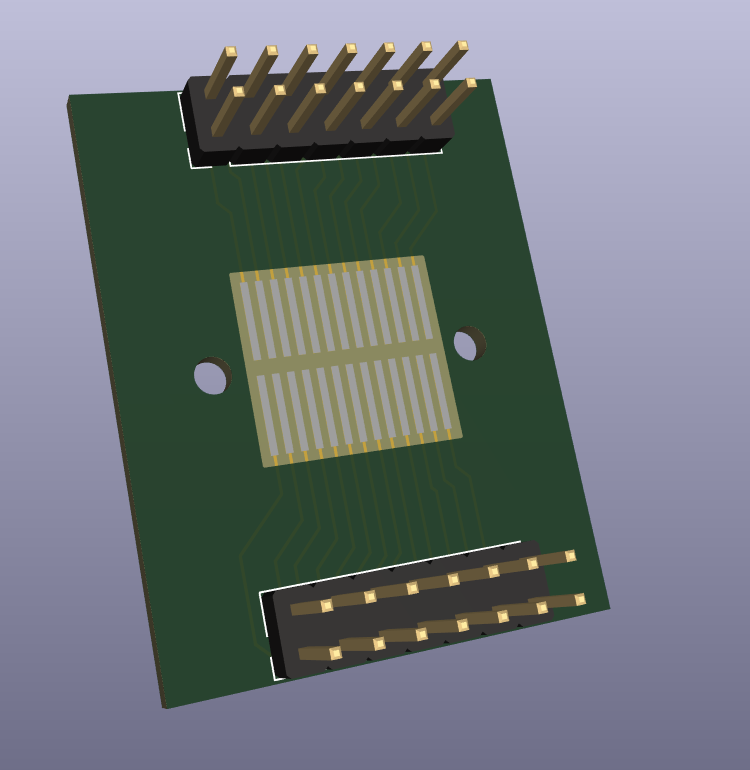
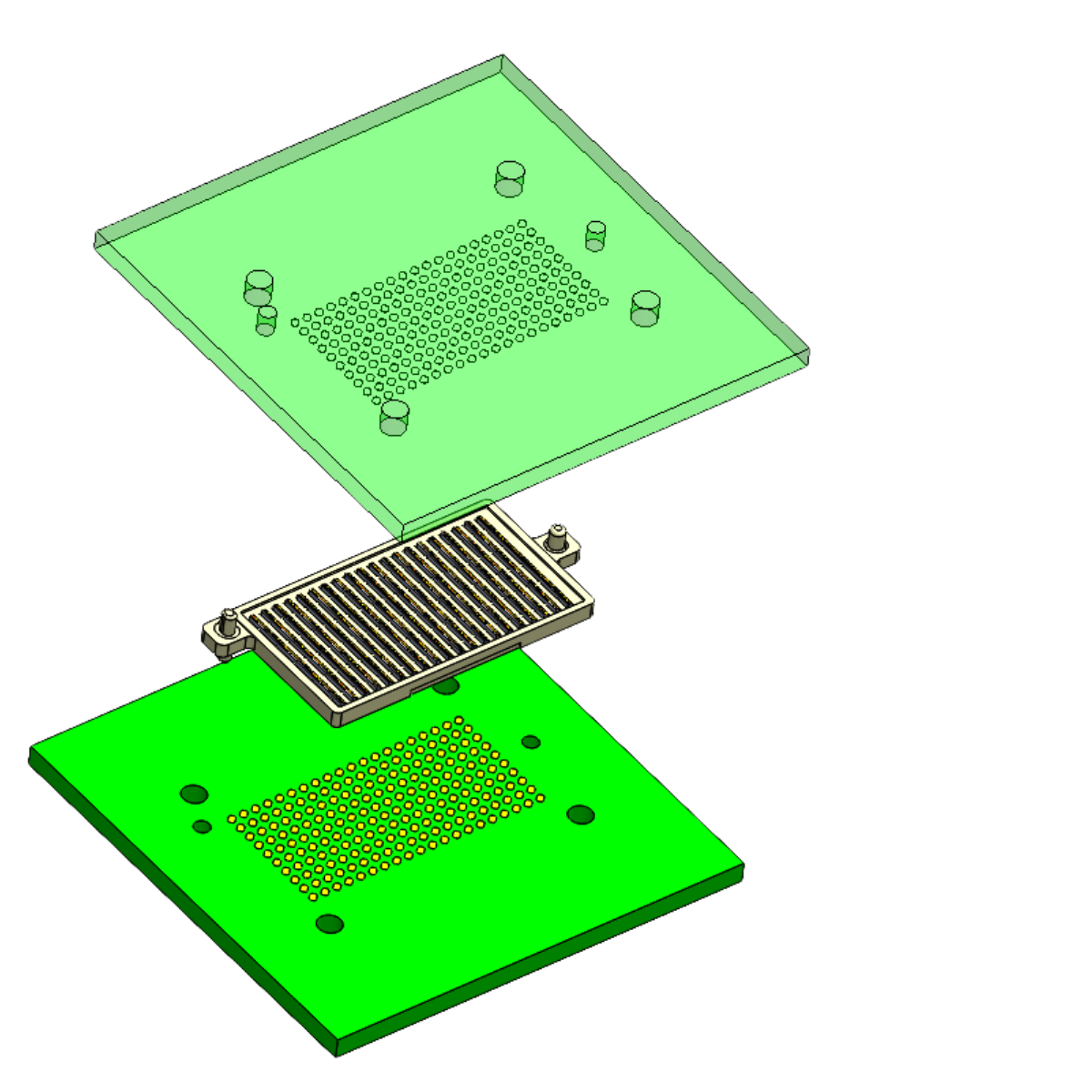
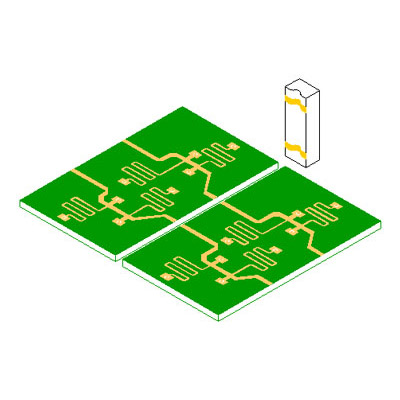
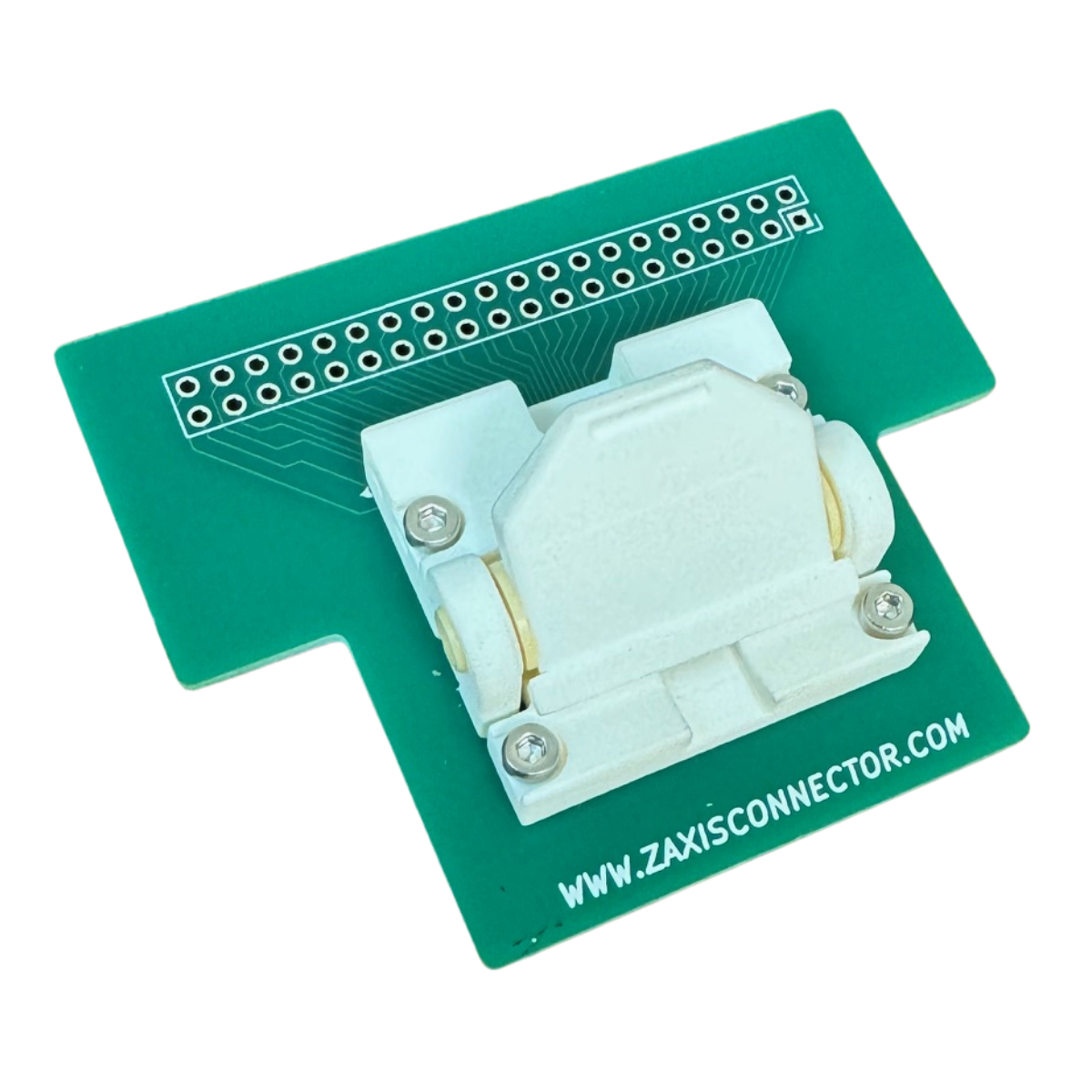
PCB Footprint Design for Elastomeric Connectors Designing Reliable Compression Contact Interfaces When using elastomeric connectors, the PCB footprint is just as important as the connector itself.…
Replacing Traditional Connectors in a High-Density Mixed-Signal System Background A customer developing a modular electronic system approached Z-Axis Connector Company while evaluating methods of transferring hundreds of signals…
Replacing Traditional RF Contacts with a Custom Elastomeric Connector The Challenge Many RF systems require a reliable connection between antennas, shields, modules, and printed circuit boards while operating within…
Using Ohm’s Law to Predict Elastomeric Connector Performance When engineers discuss current carrying capability, the conversation often begins with a simple question: How many amps can the connector…
Elastomeric Connectors for Flexible Circuit Interfaces Flexible circuits have become a core part of modern electronic systems. From embedded sensors and OLED displays to camera modules,…
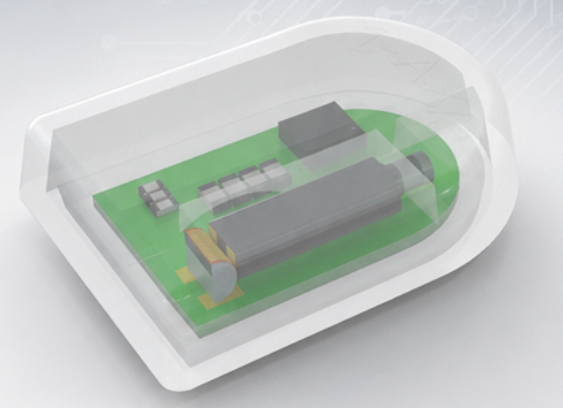
Elastomeric Connectors for Medical Device OEMs As medical electronics continue to shrink and conform to the human body, traditional interconnect methods are becoming a limiting factor.…