Compact. Customizable. Reliable. Discover why engineers are choosing Z-Fill elastomeric connectors for their next-generation products.
When designing a new electronic product, engineers are constantly balancing performance, size, cost, and manufacturability. Even something as seemingly simple as connecting two printed circuit boards can introduce unexpected challenges.
Traditional connectors often require soldering, additional PCB real estate, specialized mating components, or complex assembly processes.
Z-Fill elastomeric connectors from Z-Axis Connector Company offer a different approach.
By combining conductive elements within a flexible silicone elastomer, Z-Fill provides a compact, solderless electrical connection that can be customized to fit the mechanical and electrical requirements of an OEM application.
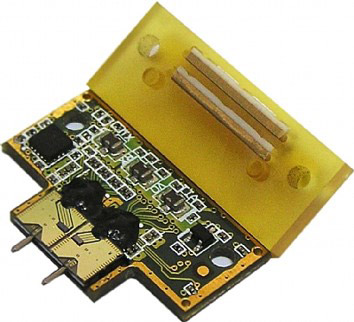
Whether you’re developing a medical device, industrial control system, test instrument, or high-volume electronic assembly, Z-Fill offers engineers a versatile alternative to conventional connector technology.
1. Solderless Connections Simplify Assembly
One of the biggest advantages of Z-Fill connectors is their ability to establish electrical connections without soldering.
Instead of relying on soldered pins or permanent connections, Z-Fill utilizes controlled compression between mating contact surfaces to establish an electrical interface.
This approach can offer several advantages:
- Elimination of soldering at the connector interface
- Simplified assembly and potential rework
- Reduced reliance on traditional connector footprints
- Compatibility with custom PCB pad layouts
- Potential reduction in assembly steps and associated costs
For OEM manufacturers, simplifying an assembly can have a significant impact when a product moves from prototype development into volume production.
Fewer assembly operations can mean a more efficient manufacturing process.
2. Designed Around Your Product, Not the Other Way Around
Traditional connector selection often forces engineers to design their product around an existing connector’s dimensions, pin configuration, or mounting requirements.
Z-Fill takes a different approach.
Because Z-Fill connectors can be manufactured in custom lengths, heights, and widths, engineers have greater flexibility to incorporate the interconnect directly into their mechanical design.
This is particularly valuable when working with:
- Compact PCB-to-PCB assemblies
- Nonstandard enclosure geometries
- Tight mechanical packaging constraints
- Custom contact pad arrangements
- Applications requiring a low-profile interconnect
Rather than redesigning an entire assembly to accommodate a standard connector, engineers can work with Z-Axis Connector Company to develop a solution around their existing design requirements.
For OEM applications, that flexibility can be a major advantage.
3. High-Density Electrical Connections in a Small Footprint
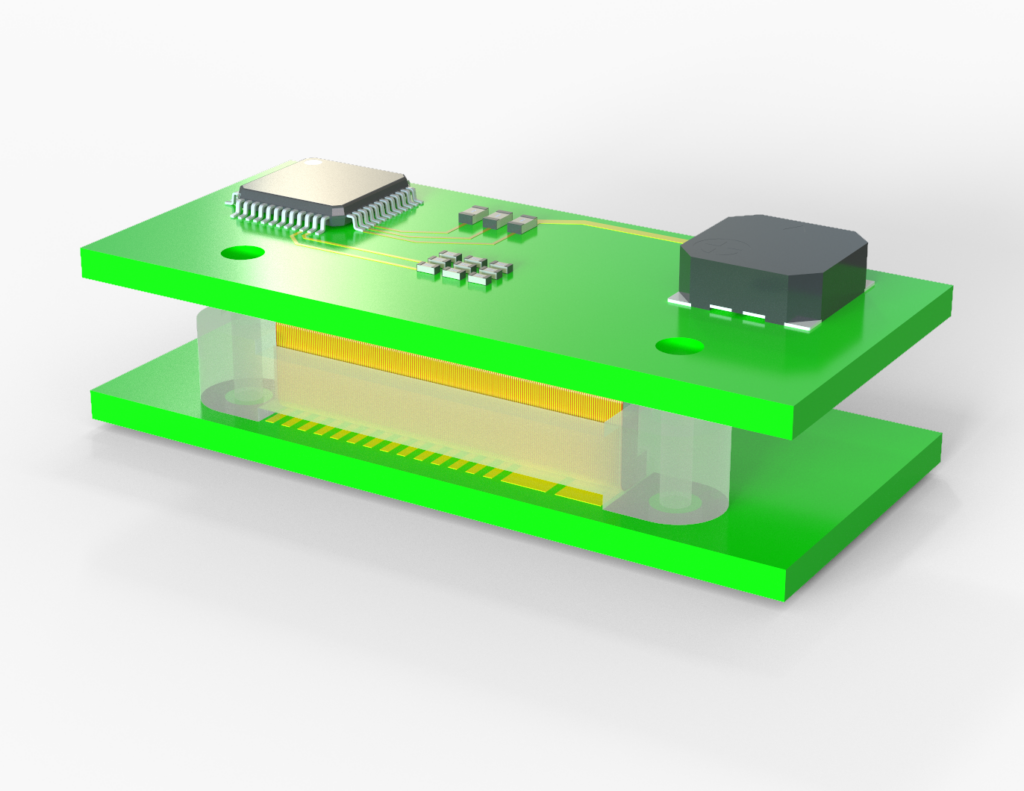
As electronic products become smaller and more sophisticated, available PCB space becomes increasingly valuable.
Z-Fill connectors incorporate closely spaced conductive elements within an insulating silicone structure, allowing multiple electrical connections to be established across a compact interface.
Depending on the selected configuration, Z-Fill can support fine-pitch contact arrangements without the mechanical complexity of individual connector pins.
This makes the technology particularly attractive for engineers developing space-constrained electronics.
With proper pad design, alignment, and compression, a single Z-Fill connector can provide an elegant solution for connecting multiple electrical signals between mating surfaces.
4. Built for Repeatable Compression-Based Contact
Reliable electrical contact is essential in any OEM design.
Z-Fill connectors are engineered to operate under controlled compression, allowing the conductive elements to establish contact with the mating PCB surfaces.
Unlike rigid connector systems, the compliant elastomeric structure can accommodate limited mechanical variations within the designed compression range.
Successful integration depends on several important factors, including:
- Contact pad geometry and surface finish
- Compression percentage
- PCB alignment and coplanarity
- Mechanical retention
- Environmental and electrical requirements
By considering these factors early in the design process, engineers can develop an interconnect assembly optimized for consistent electrical performance.
Z-Axis works directly with OEM engineering teams to help evaluate these requirements.
5. From Prototype to High-Volume OEM Production
An interconnect that works in the laboratory must also be practical to manufacture.
For OEM engineers, this means considering not only electrical performance but also assembly time, repeatability, tooling, and long-term product requirements.
Z-Fill connectors can be incorporated into custom mechanical assemblies designed for straightforward installation and controlled compression.
Their solderless design also creates opportunities for simplified production workflows.
Z-Axis Connector Company supports engineering teams throughout the development process, from initial concept evaluation and prototype quantities to production-oriented connector designs.
Early collaboration allows critical design considerations to be addressed before a product reaches the manufacturing floor.
6. Applications Across Multiple Industries
The versatility of Z-Fill makes it suitable for a broad range of electronic applications.
Medical Electronics
Compact electrical interfaces for diagnostic equipment, instrumentation, and other medical electronic assemblies where space and mechanical integration are important.
Industrial Electronics
Custom PCB interconnects for control systems, sensors, embedded electronics, and specialized industrial equipment.
Test & Measurement
Compression-based electrical interfaces for test fixtures, instrumentation, and applications where solderless contact offers an assembly advantage.
Consumer & Embedded Electronics
Space-efficient interconnect solutions for compact electronic products with specialized mechanical or electrical requirements.
Each application presents unique challenges, and selecting the right connector requires an understanding of the complete assembly.
7. Engineering Support Makes the Difference
A successful OEM interconnect is more than just a connector.
It is the combination of electrical design, mechanical integration, material selection, and manufacturability.
At Z-Axis Connector Company, we work directly with engineering teams to evaluate their applications and identify practical elastomeric connector solutions.
Our team can review PCB layouts, mating pad geometry, mechanical constraints, and compression requirements to help determine whether Z-Fill is a suitable fit.
For engineers developing a new product, involving the connector manufacturer early can help avoid unnecessary design revisions later in the development process.
Ready to Integrate Z-Fill Into Your Next Design?
Whether you’re replacing a traditional board-to-board connector, developing a compact electronic assembly, or evaluating a custom solderless interconnect, Z-Fill may provide a simpler approach.
Have a PCB layout, mechanical drawing, or interconnect challenge? We’d like to take a look.
Contact Z-Axis Connector Company to discuss your OEM application, request a custom connector evaluation, or obtain a quotation.